Chat now with support
Chat mit Support

Foglight for Hyper-V 5.7.0 - User and Reference Guide

About Foglight for Hyper-V Agent administration Performance monitoring with the Hyper-V Environment dashboard Performance investigation with the Hyper-V Explorer Foglight for Hyper-V alarms Appendix: Hyper-V Agent error codes

Servers view

The Servers view is a tree view. It lists the servers that exist in your environment and shows their state.
This view appears in the Quick-View on the left when you select the Servers tile in the Virtual Environment view.
Figure 64. Servers view
Selecting the All Servers node displays overall resource utilization for all servers in your integrated system, and the elements that consume the highest amount of system resources in the Summary - All Servers view on the right. Similarly, selecting a server node shows server-specific metrics in the Server Summary view.
Alarm severity. The state of the most recent alarm raised against the associated server.
All Servers. A parent node for the server object instances that appear in this view.
Server. The server name.

Summary - All Servers view

The Summary - All Servers view displays overall resource utilization information for a group of physical servers and shows the elements that consume the highest amount of system resources.
This view appears in the Quick-View on the left when you select All Servers in the Servers view.
Figure 65. Summary - All Servers view
Table 20. Alarms
Alarm Message. An explanation about why the alarm occurred.
Severity. Indicates the alarm severity: Warning, Critical, or Fatal.
Time. The time at which the alarm was generated.
Severity. Displays the Alarm dialog box, showing additional information about the alarm. For more information about alarms in Foglight, see the Foglight User Help.
Figure 66. Alarm dialog box
Time. Links to the Server Summary view.
Server. The name of the server.
Utilization.The total percentage of CPU utilization the top three CPU consumers spend on executing system code and user programs, during the selected time range.
Utilization (in the graph). Displays the Top 3 Servers-CPU Utilization dialog box.
Figure 67. Top 3 Servers-CPU Utilization dialog box
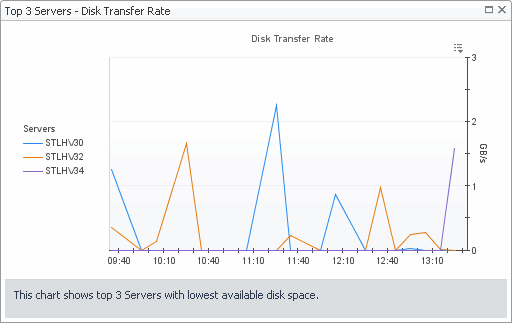
Rate. The rate at which the top three disk consumers read or write data to the disk during the selected time range.
Server. The name of the server.
Rate (in the graph). Displays the Top 3 Servers - Disk Transfer Rate dialog box.
Consumed. The amount of memory the top three memory consumers use during the selected time range.
Server. The name of the server that is one of the top three memory consumers.
Consumed. Displays the Top 3 Servers - Memory Consumed dialog box.
Rate. The rate at which the top three network consumers transfer data to or from the network during the selected time range.
Server. The name of the server that is one of the top three network consumers.
Rate. Displays the Top 3 Servers - Network Transfer Rate dialog box.

Server Summary view

The Server Summary view shows the overall resource utilization and the amounts of system resource consumption for a physical server.
This view appears in the Quick-View on the left when you select a server in the Servers view.
Figure 71. Server Summary view
Table 25. Alarms
Alarm Message. An explanation about why the alarm occurred.
Severity. Indicates the alarm severity: Warning, Critical, or Fatal.
Time. The time at which the alarm was generated.
Alarm Message, Severity, or Time. Displays the Alarm dialog box, showing additional information about the alarm. For more information about alarms in Foglight, see the Foglight User Help.
Figure 72. Alarm dialog box
Table 26. Related Items
Cluster. The name of the cluster to which the selected server belongs, followed by the counts of all alarms associated with the cluster, broken down by the alarm state (Normal, Warning, Critical, Fatal).
Server. The name of the selected server, followed by the counts of all alarms associated with that server, broken down by the alarm state (Normal, Warning, Critical, Fatal).
Virtual machines. The number of the virtual machines running on the selected server, followed by the counts of all alarms associated with those virtual machines, broken down by the alarm state (Normal, Warning, Critical, Fatal).
Alarm count. Displays a dwell that shows the objects against which alarms are generated.
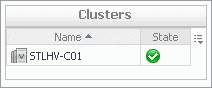
Cluster. Displays the Clusters dwell, showing the name and state of the cluster the selected server belongs to.
Figure 74. Clusters dwell
Server. Displays the Servers dwell, showing the name and state of the selected server.
Figure 75. Servers dwell
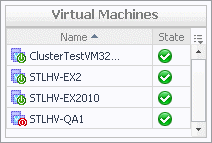
Virtual Machines. Displays the Virtual Machines dwell, showing the names and states of the virtual machines that are running on the selected server.
Figure 76. Virtual Machines dwell
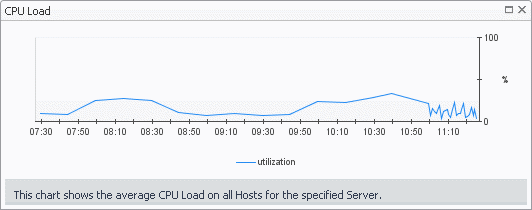
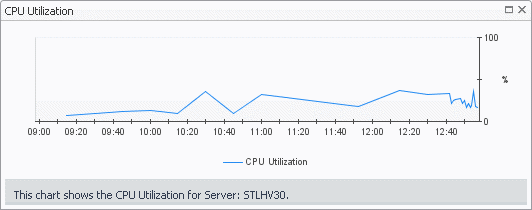
CPU Load. The current percentage of the selected server’s CPU load, used to execute system code and user programs, based on the total CPU capacity.
CPU Utilization, % Used. The percentage of the server’s CPU utilization spent on executing system code and user programs during the selected time period.
CPU Utilization, Baseline. An envelope indicating the expected CPU utilization range based on historical data.
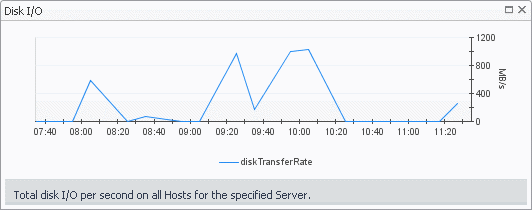
Disk I/O. The current disk I/O rate for the selected server.
Disk Utilization, Baseline. An envelope indicating the expected disk utilization range based on historical data.
Disk Utilization, Transfer Rate. The rate at which the server reads and writes data to the disk during the selected time period.
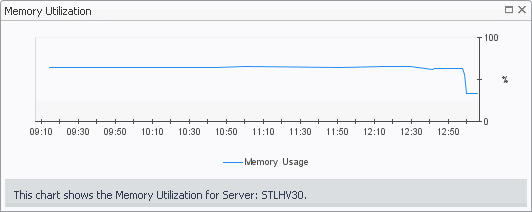
Memory Usage. The current percentage of the average memory usage by the selected server, based on the total memory capacity.
Memory Utilization, % Used. The percentage of the available memory that the server uses during the selected time period.
Memory Utilization, Baseline. An envelope indicating the expected memory utilization range based on historical data.
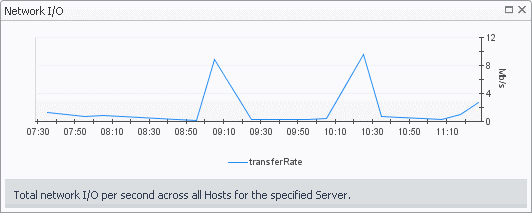
Network I/O. The current rate at which the selected server transfers data from and to the network.
Network Utilization, Baseline. An envelope indicating the expected network utilization range based on historical data.
Network Utilization, Transfer Rate. The rate at which the selected server transfers data from and to the network during the selected time period.
CPU Load spinner. Displays the CPU Load dialog box.
Figure 77. CPU Load dialog box
CPU Utilization graph. Displays the CPU Utilization dialog box.
Figure 78. CPU Utilization dialog box
Disk I/O spinner. Displays the Disk I/O dialog box.
Figure 79. Disk I/O dialog box
Disk Utilization graph. Displays the Disk Utilization dialog box.
Figure 80. Disk Utilization dialog box
Memory Usage spinner. Displays the Memory Usage dialog box.
Figure 81. Memory Usage dialog box
Memory Utilization graph. Displays the Memory Utilization dialog box.
Figure 82. Memory Utilization dialog box
Network I/O spinner. Displays the Network I/O dialog box.
Figure 83. Network I/O dialog box
Network Utilization graph. Displays the Network Utilization dialog box.
Figure 84. Network Utilization dialog box

SCVMM server monitoring

Verwandte Dokumente

The document was helpful.

Bewertung auswählen

I easily found the information I needed.

Bewertung auswählen