|
1 |
On the navigation panel, under Dashboards, click Application Servers > Administration > Application Servers Administration. |
|
2 |
|
3 |
In the menu that opens, select Java. The wizard opens. |
|
4 |
On the Setup Options page of the wizard, click Reuse previous application server integration details. |
|
• |
Click New log configuration. The New Log Configuration dialog box opens. |
|
TIP: If you are uncertain about how to adjust these settings, click Help for an overview of log targets and their purposes. For more information, see Creating or Editing Logging Properties. |
|
1 |
On the navigation panel, under Dashboards, click Application Servers > Administration > Application Servers Administration. |
|
2 |
On the Application Servers Administration dashboard, click Java Administration. |
|
3 |
On the Java Administration dashboard, click the Agent Configurations tab. |
|
1 |
On the navigation panel, under Dashboards, click Application Servers > Administration > Application Servers Administration. |
|
2 |
On the Application Servers Administration dashboard, click Java Administration. |
|
3 |
On the Java Administration dashboard, click the Agent Configuration tab. |
|
4 |
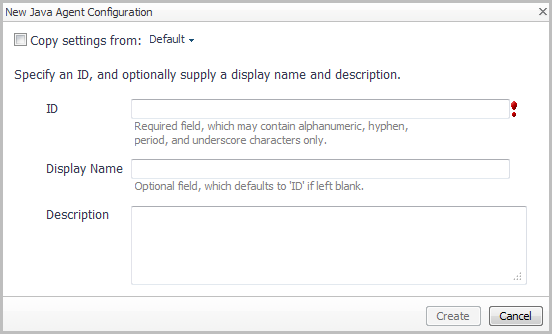
On the Agent Configuration tab, click New configuration. The New Java Agent Configuration dialog box opens. |
|
5 |
Optional — To use an existing configuration as the basis for your new configuration, select the Copy settings from check box and select an existing configuration from the list. |
|
6 |
Type the identifier (ID) for this configuration in the first box. The ID can contain the following types of characters: alphanumeric, hyphens, periods, and underscores. No other characters are allowed. |
|
7 |
Optional — Type a descriptive name for the configuration in the Display Name box. |
|
8 |
Optional — Type a short description for the configuration in the Description box. |
|
9 |
Click Create. |
|
1 |
On the navigation panel, under Dashboards, click Application Servers > Administration > Application Servers Administration. |
|
2 |
On the Application Servers Administration dashboard, click Java Administration. |
|
3 |
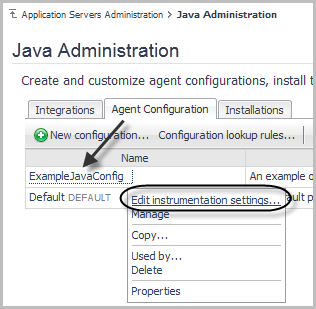
On the Java Administration dashboard, click the Agent Configuration tab. |
|
5 |
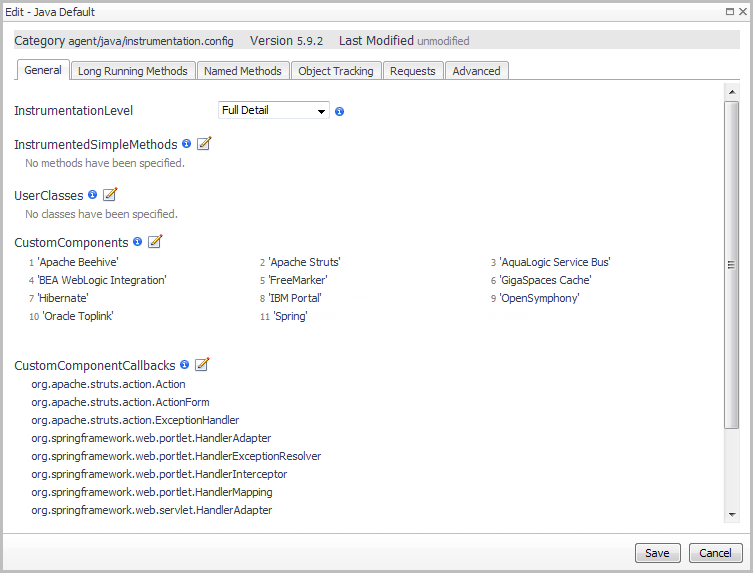
On the menu that opens, click Edit instrumentation settings. |