Chatta subito con l'assistenza
Chat con il supporto

Foglight for Hyper-V 5.7.0 - User and Reference Guide

About Foglight for Hyper-V Agent administration Performance monitoring with the Hyper-V Environment dashboard Performance investigation with the Hyper-V Explorer Foglight for Hyper-V alarms Appendix: Hyper-V Agent error codes

Storage view

The Storage tree view lists the available volumes and indicates their severity state.
This view appears in the Quick-View on the left when you select the Storage tile in the Virtual Environment view.
Figure 123. Storage view
Selecting the All Storage node displays the overall resource utilization for all volumes in your integrated system and identifies the ones that consume the highest amount of system resources in the Summary - All Storage view on the right. Similarly, selecting a volume node shows volume-specific metrics in the Volume Summary view.
Alarm severity. The state of the most recent alarm raised against the volume.
All Storage. A parent node for the instances of all volumes that appear in this view.
Volume. The name of the volume.

Summary - All Storage view

The Summary - All Storage view displays overall resource utilization information for all volumes in the selected service and identifies the elements that consume the highest amount of resources.
This view appears in the Quick-View on the left when you select All Storage in the Storage view.
Figure 124. Summary - All Storage view
Table 50. Alarms
Alarm Message. An explanation about why the alarm occurred.
Severity. Indicates the alarm severity: Warning, Critical, or Fatal.
Time. The time at which the alarm was generated.
Alarm Message, Severity, or Time. Displays the Alarm dialog box, showing additional information about the alarm. For more information about alarms in Foglight, see the Foglight User Help.
Figure 125. Alarm dialog box
Volume. The name of the volume identified amongst those with the lowest amount of free space.
Free space. The amount of available space on the volume.
Volume. Shows the Volume view.
Volume. The name of the volume identified as being likely to become full.
Rate. The projected amount of time after which the volume becomes full.
Volume. Shows the Volume view.
Table 53. Top Free Space
Volume. The name of the volume identified as having a high amount of free space.
Free space. The amount of space available on the volume.
Volume. Shows the Volume view.
Volume. The name of the volume identified sa having high weekly growth rate.
Rate. The rate at which the associated virtual machines use the disk space.
Volume. Shows the Volume view.

Volumes Summary view

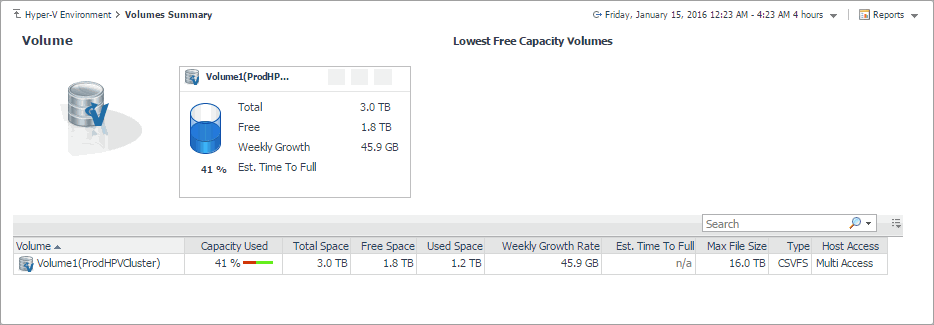
The Volumes Summary view displays complete details for all volumes in the selected service and identifies the ones that consume the lowest amounts of disk resources.
Figure 126. Volumes Summary view
Table 55. Volume table
Capacity Used. The percentage of the volume space that is currently in use.
Est. Time Until Full. The estimated amount of time after which the selected volume becomes full.
Free Space. The amount of volume space that is available for use.
Host Access. Indicates if multiple servers can access to this host.
Max File Size. The maximum file size on the selected volume.
Total Space. The total amount of volume space, including free and used space.
Type. The file system on the selected volume.
URL. The URL to the selected volume.
Used Space. The amount of volume space that is currently in use.
Volume. The name of the volume identified amongst those with the lowest amount of free space.
Weekly Growth Rate. The projected amount of the volume space that becomes in use on a weekly basis.
Any column. Shows the volume details in the Volume view.
Table 56. Volume tile
Free. The amount of volume space that is available for use.
Percent Free. The percentage of volume space that is available for use.
Total. The total amount of volume space, including free and used space.
Volume. The name of the volume, followed by the related alarm counts.
Weekly Growth Rate. The projected amount of the volume space that becomes in use on a weekly basis.

Volume Summary view

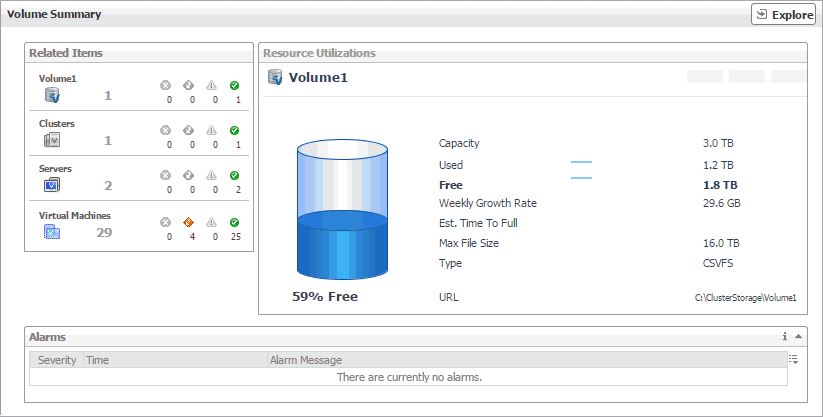
The Volume Summary view shows the levels of resource utilization and consumption for a selected volume.
Table 57. Alarms
Alarm Message. An explanation about why the alarm occurred.
Severity. Indicates the alarm severity: Warning, Critical, or Fatal.
Time. The time at which the alarm was generated.
Alarm Message, Severity, or Time. Displays the Alarm dialog box, showing additional information about the alarm. For more information about alarms in Foglight, see the Foglight User Help.
Figure 128. Alarm dialog box
Table 58. Related Items
Clusters. The number of clusters associated with the selected volume, followed by the related alarm counts.
Servers. The number of servers associated with the selected volume, followed by the related alarm counts.
Virtual Machines. The number of virtual machines that are associated with the selected volume, followed by the related alarm counts.
Volume. Represents the selected volume. Shows the counts of the alarms generated against the volume.
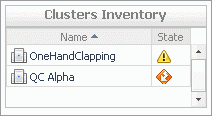
Clusters. Displays the Clusters dwell, showing the names and states of all clusters that are associated with the selected volume.
Figure 129. Clusters dwell
Server. Displays the Servers dwell, showing the names and state of the servers associated with the selected volume.
Figure 130. Servers dwell
Virtual Machines. Displays the Virtual Machines dwell, showing the names and states of all virtual machines that are associated with the selected volume.
Figure 131. Virtual Machines dwell
Volume. Displays the Other Items Inventory dwell, showing the state of the selected volume.
Capacity. The total amount of volume space, including free and used space.
Est. Time Until Full. The estimated amount of time after which the selected volume becomes full.
Free. The amount of volume space that is available for use.
Max File Size. The maximum file size on the selected volume.
Percent Free. The percentage of volume space on the that is available for use.
Type. The file system on the selected volume.
URL. The URL to the selected volume.
Used. The amount of volume space that is currently in use.
Volume. The name of the selected volume, followed by the related alarm counts.
Weekly Growth Rate. The projected amount of the volume space that becomes in use on a weekly basis.
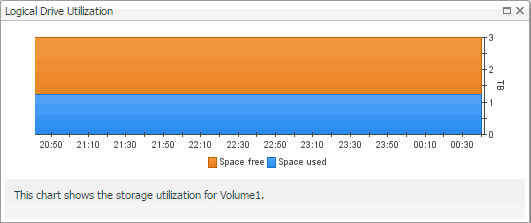
Free or Used. Displays the Logical Drive Utilization dialog box.
Figure 133. Logical Drive Utilization dialog box
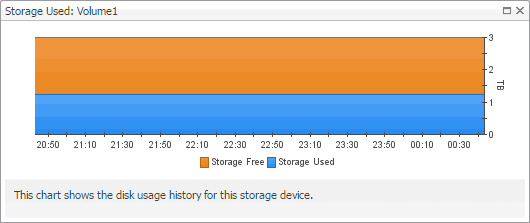
Percent Free. Displays the Storage Used dialog box.
Figure 134. Storage Used dialog box
Related Documents

The document was helpful.

Seleziona valutazione

I easily found the information I needed.

Seleziona valutazione