Below is a list of available functions within the Database Explorer window.
|
Button or Menu |
Function |
|---|---|
|
Edit Menu
|
|
|
Edit Menu
|
|
|
Right-click Menu |
|
|
Right-click Menu |
|
|
Right-click Menu |
|
|
Data Tab |
Quest SQL Optimizer for IBM® DB2® LUW maximizes SQL performance by automating the manual, time-intensive and uncertain process of ensuring that SQL statements are performing as fast as possible. SQL Optimizer analyzes, rewrites, and evaluates SQL statements within multiple database objects, files. With SQL Optimizer, you can analyze and optimize all your problem SQL from multiple sources. SQL Optimizer also provides you a complete index optimization and plan change analysis solution, from index recommendations to simulated index impact analysis, through comparison of multiple SQL access plans.
SQL Optimizer provides you with the following main modules.
SQL Optimizer (including SQL Rewrite and Generate Indexes functions)
The SQL Repository stores the SQL statements that are used in the analysis of database performance. These may be SQL statements that you have identified as critical to the performance of your database application.
The SQL Repository is stored in a file directory that can be accessed by your computer, either a directory on your local computer or a network drive. This directory is specified in the Options settings.

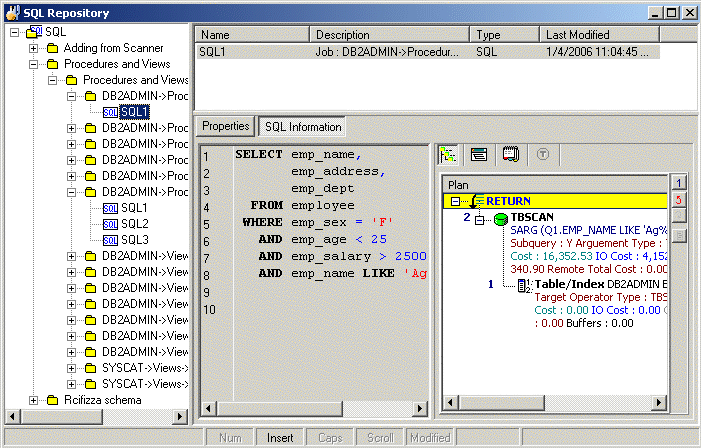
The SQL Repository window displays the information about the SQL statements that are saved in the SQL Repository. It is divided into three panes.
Displays a tree diagram of the SQL statements and the folders they are stored in.
Displays detailed information about the folder, the SQL statement, or the folder with its contents depending on which item in the tree in the left pane is selected.
The detailed information about the SQL statement is displayed in the button pages. The buttons for displaying specific information are found at the top of this pane.
Displays general information, the SQL name, where the SQL statement was copied from, the logon connection, and database and other settings.
Displays SQL Information pane where you can select to display the SQL text, the access plan, SQL classification, and DDL for any temporary tables used in the SQL statement.